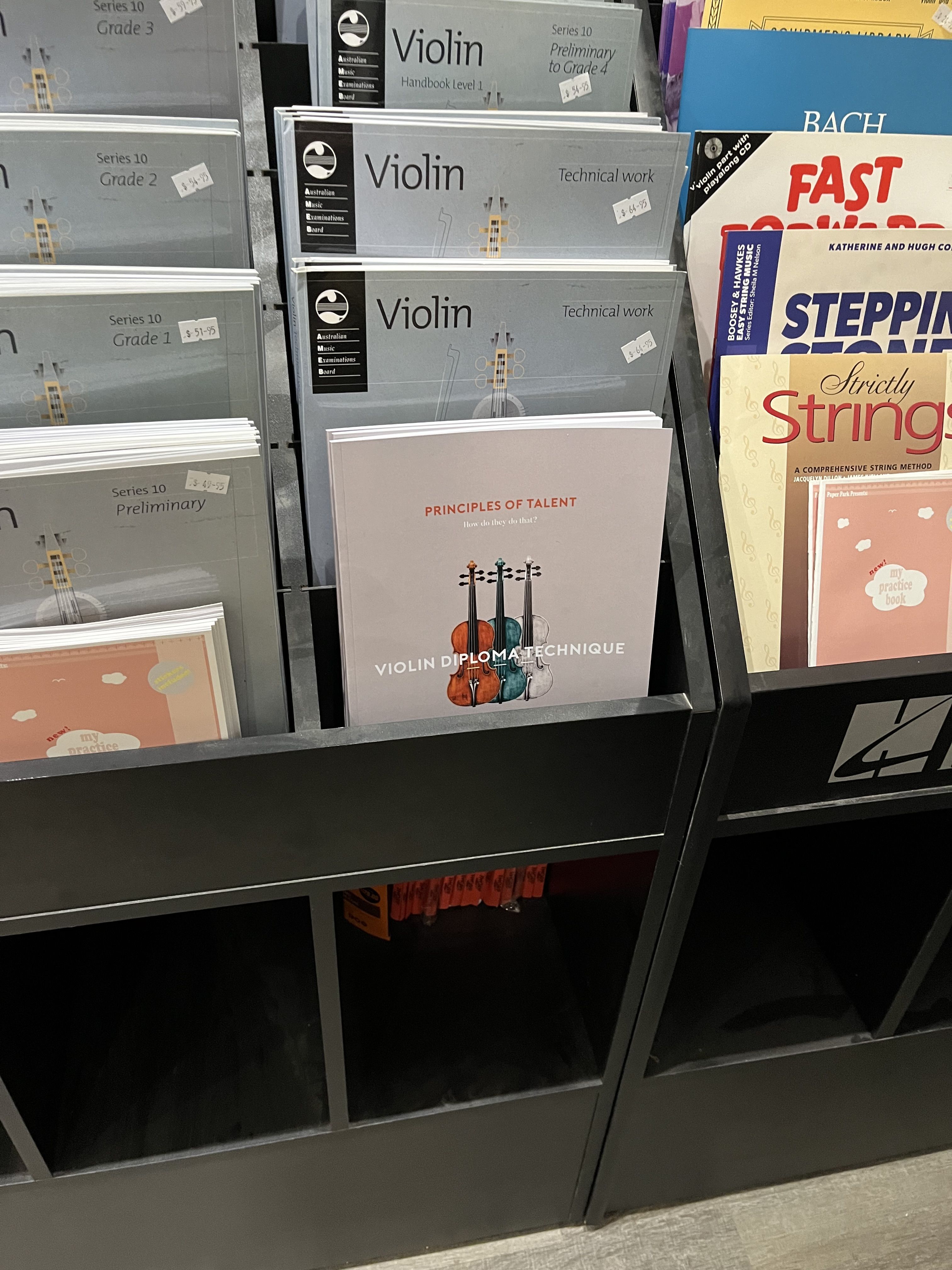
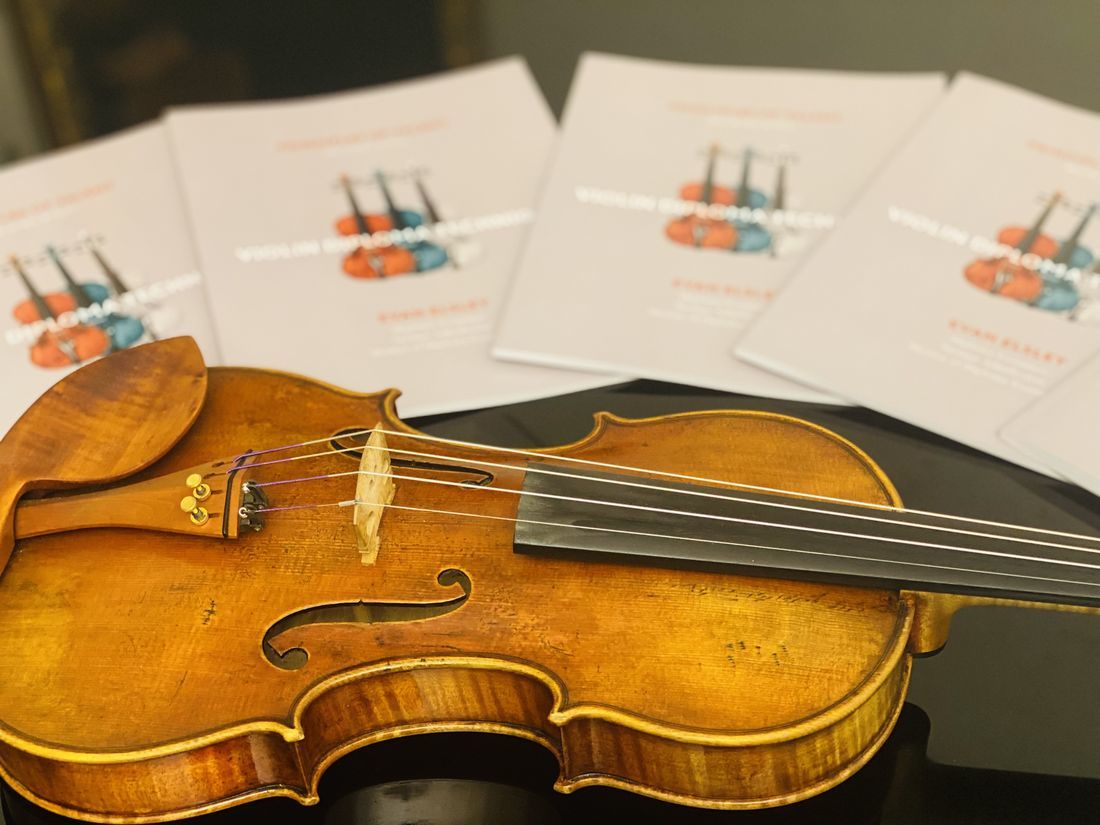
| Q & A Who is this book written for? Answer:
It is primarily written for the violin students who technically plateau and struggle to progress from the higher grades to diploma levels. Traditional violin pedagogy has produced the world’s best players. Isn't everything already known? Answer:
There is an expression that "Teachers teach what can be taught and students bring what cannot be taught". It is legitimate to not only admire the success stories, but also to analyse why students who have the same pedagogy do not progress. Isn’t this just a personal teaching philosophy inflated into a “theory of talent”? Answer:
No, because specific techniques are defined in detail. Violinists can consider them purely on their logical application. It is a "how to do" something book intended to get rapid results. Does this book replace traditional teaching? Answer:
No, it is only a supplement. It has been written to help students understand why their traditional exercises sometimes work and sometimes don’t. The Principles of Talent provides a detailed explanation of techniques that tradition often leaves implicit and vague. Violinists plateau not only because they may lack discipline, or good teachers—but also because the final layers of technique have never been explicitly defined. | What is talent, and how can advanced level intonation and co-ordination be captured? Answer:
The book defines new technical approaches to string crossing, directional momentum, and invention that are the enigmas of talent. It provides a thinking technique that uses causal logic and the physical forces of nature. To summarise: Every violin technique takes time to do, this means that every technique can be placed into a timeline where something must be done before a predictable result is obtained. For instance, it is logical for a note to be tuned before the audience hears it, not after. It is not logical to bow a new note while the left hand finger is still in the air. The solution to co-ordination and intonation: If the finger is in contact with the string (not touching the fingerboard) and already in tune at the exact moment of the bow change, then co-ordination and intonation are functionally captured. The timeline provides new technical definitions that reveal how this is done in exact detail. Is there peer-reviewed research validating these claims? Answer:
The book is not intended to be an academic thesis. Instead, the techniques in the book are practical. They must capture repeated success when tested under the rigours of external adjudication. Historically, performance disciplines have always advanced through empirical refinement before academic formalisation. This book builds on traditional pedagogy.
The author simply stands at the boundary, where tradition stops explaining. |