Violin lessons Launceston & Sydney
Masterclasses & Online Lessons

Evan is a
- University Violin teacher
- Diploma Examiner
- Eisteddfod Adjudicator
- Internationally experienced Director of Strings
- Celebrated Performer on TV, Recordings, Radio, Concerts
- Specialist in talent research and development
- Director of Elsley Ensembles P/L
Q & A: The Pedagogy Behind Violin Diploma Technique – Principles of Talent
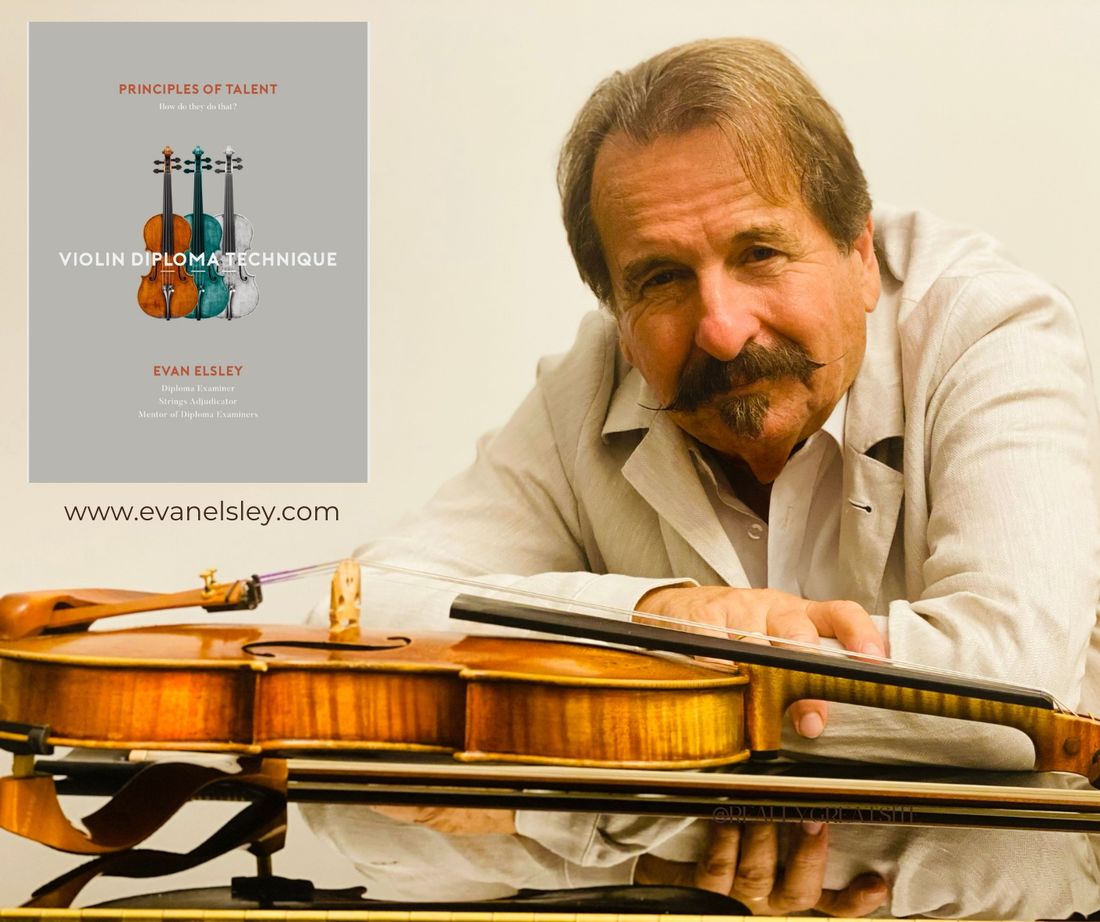
What is innovative in the book "Violin Diploma Technique: Principles of Talent" ?
It defines five intuitive techniques of talent that distinguish between successful diplomates and candidates that stop progressing. Without these techniques in some form, the mastering of advanced repertoire is logistically not achievable.
Does technical talent really exist?
Yes. Conservatoriums and master teachers actively search for it at auditions. It is easily recognised. However, this book redefines talent not as mystique, but as cognitive-temporal efficiency. When understood this way, talent becomes teachable technical architecture.
What type of practical problems does this pedagogy solve?
It solves many of the historical problems associated with technical security. Despite the globalisation of teaching resources, fundamental techniques such as co-ordination and intonation continually remain dominant problems in the examination room. Learning the violin is also an expensive process, and it is common for students to frequently change teachers in their search for answers. Another problem, rarely considered, is that traditional pedagogy does not value the student's finite time. The book addresses these “forever problems.”
What is the central idea of the book?
Every violin technique takes time. Therefore, every technique can be placed into a logical timeline sequence. If an intended result must occur at a predictable moment, something must happen before that moment. A simple example:
-
A note should be tuned before the audience hears it—not after.
-
A new note should not be bowed while the finger is still in the air.
Most technical fluency problems are mis-sequenced timing errors. If, however, the finger is already in contact with the string and in tune before the moment of the bow change, then co-ordination, intonation and the bow change are captured simultaneously. The timeline reveals that many examination technical failures are pre-contact timing failures.
Is this difficult to apply?
No. The physical actions already exist. The timeline simply organises them. Once the mind is trained to execute specific actions at specific moments, confusion disappears. Practice gains a mechanism for consistency and the mind creates its own technical sensations. There is no "centipede dilemma" because the mind focusses on one thing at a time. For instance, musical ideas are shaped during the follow through of the bow stroke, not when tuning the finger..
How does this differ from traditional pedagogy?
Despite significant pedagogical advances, violin teaching remains structurally rooted in the 19th-century étude tradition, where technical acquisition occurs primarily through repetition, modelling, and incremental refinement. Sensory and kinaesthetic awareness are certainly addressed in the work of pedagogues such as Simon Fischer, Paul Rolland, and Ivan Galamian; however, their explanations can be extensive, long, and overwhelming. Additionally, many widely used beginner methodologies are internally coherent for early technical stages yet do not always scale smoothly to the technical demands of advanced repertoire. The timeline does not replace tradition — it clarifies it. It provides a unifying, sequential architecture grounded in the logic of common sense rather than in assumed hope.
Will it improve the level of average students?
Yes. It is intended for all students. RESULTS from my studio and other colleagues show consistent studio-based outcomes. At a recent AMEB session, an 8-year-old student achieved a 6th Grade Credit after only 18 months of study with one lesson per week.
How does this help with nervousness?
Thinking about being nervous triggers physiological symptoms. When the mind, however, is fully occupied with a precise thinking technique, it has no time to think about being nervous.
Is technical talent one dimensional?
No, violin technique is like a computer game where totally new demands are introduced at different historical periods. The first level is intonation and co-ordination. The next level is when the violin was modernised and the dynamics of the bow changed. Then comes the virtuosic ability to move around the instrument. Followed by the need for technical invention and application of causal problem-solving strategies with later repertoire.
Can you give some simple examples?
Try these:
-
Play an up-bow on the E string and let the bow fall naturally onto the G string using gravity.
-
Compare this to doing a down-bow on the E string and then doing an up-bow on the G string, forcing the opposite motion.
-
When shifting, using the upper half of the bow often provides greater physical ease than shifting in the lower half of the bow. This is also due to gravity.
Talent includes knowing what is physically easy—and organising decisions and musical ideas around that.
What does this book explain that others do not?
It introduces causal logic into violin technique:
-
Technical talent is not mystical.
-
It emerges from temporally ordered cognition.
-
That ordering can be defined.
-
That definition reveals micro-moments.
-
Those micro-moments are teachable.
-
When taught, they reproduce what appears to be intuition.
Apart from combining every violin technique into one cognitive-temporal system, it also details techniques of invention and sport that are frequently used by talented candidates. Insights into the diploma level assessment process are also referenced.
Is this a shortcut to practice?
Not a shortcut to practice. A shortcut to inefficient pedagogy.
How should the book be judged?
By one criterion: Can its principles be applied consistently to produce reliable technical outcomes—independent of selective admission or rare natural aptitude? If yes, then talent has been redefined as teachable architecture.
Is there an academic way of explaining the timeline?
Yes, in practical terms, a timeline organises the sequence of actions. Academically, this can be seen as temporal cognitive organisation. The mind’s ability to sequence perception, planning, execution, and feedback into precisely integrated moments. The foundation of skilled performance emerges when these temporal structures align, while errors arise when they do not. Conceptualising talent as the efficiency with which these sequences are internalised and flexibly deployed provides a unifying framework for co-ordination, intonation, and skill acquisition. This perspective frames the enigma of virtuosic technique as teachable, measurable, and systematically cultivable through cognitive-temporal interventions, offering a rigorous lens for research, pedagogy, and performance optimisation.
Final question: Who is this for?
For violinists who realise:
-
Their intonation and co-ordination are never fully secure.
-
Their progress has plateaued, despite learning from master teachers.
-
For teachers who suspect there are gaps in traditional explanation.
-
For advanced students seeking diploma-level certainty.
Turn practice into results.
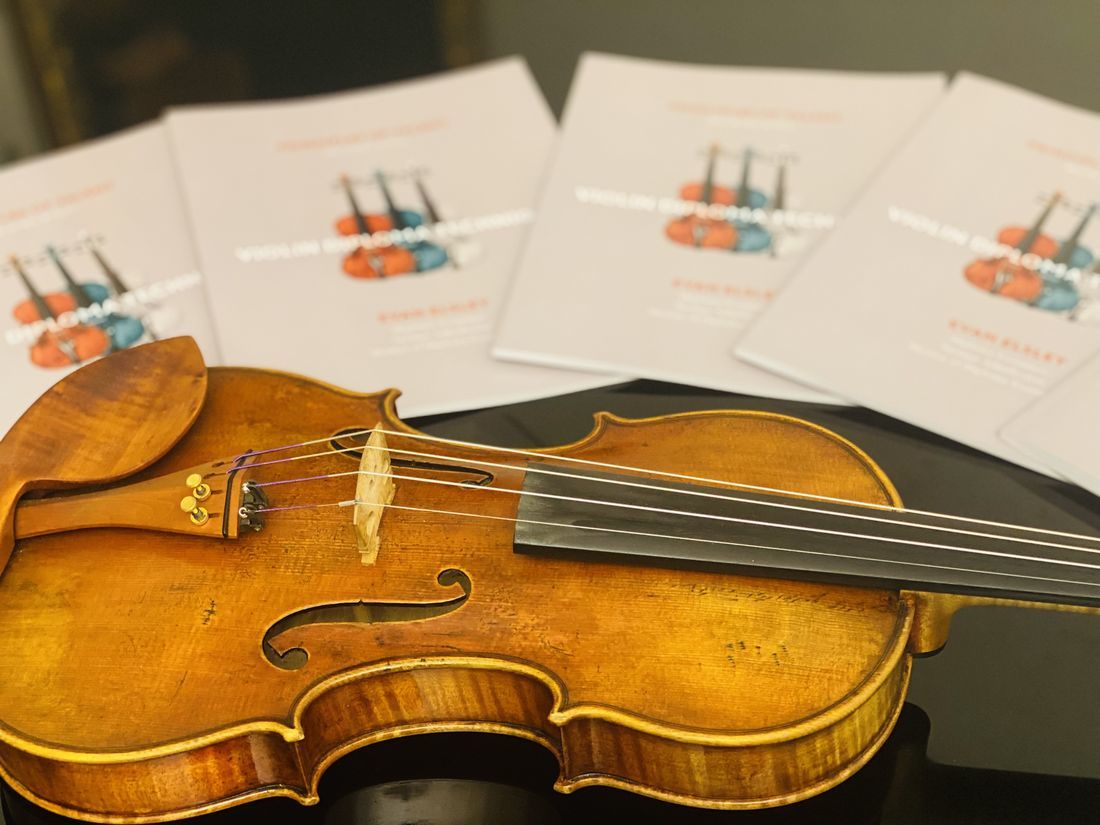
Violin Diploma Technique – Principles of Talent
Teachable. Measurable. Repeatable.